










While selecting paving materials for an outdoor space, most homeowners focus on colour, finish, and layout. Thickness is often put on the backburner and not considered till later on.
However, thickness plays an absolutely critical role in how well pavers perform over time. It affects durability, load capacity, installation method, and long-term maintenance.
This guide explains how to choose the right thickness for granite paver projects, whether for garden paths, patios, or driveways. It outlines what granite is, why thickness matters, and how different applications require different structural support.
What Are Granite Pavers?
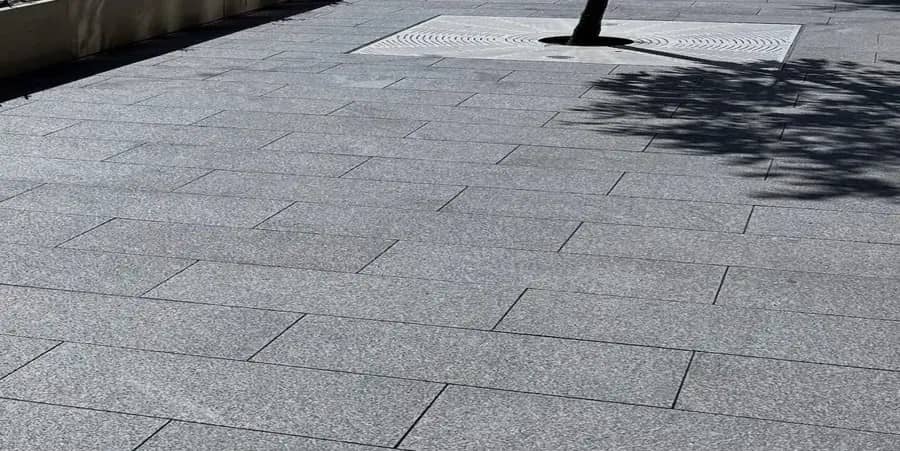
Granite is a dense natural stone formed from cooled magma beneath the earth’s surface. It is known for its hardness, low porosity, and resistance to wear.
As part of the broader category of natural stone pavers, granite is commonly used in high-traffic outdoor areas because it withstands pressure and weather exposure exceptionally well.
Key characteristics of granite pavers include:
- High compressive strength
- Strong resistance to scratching and abrasion
- Low water absorption
- Suitability for harsh Australian climates
Because of these properties, granite is frequently chosen for driveways, courtyards, commercial spaces, and high-use residential areas.
The Paver Shop has a wide range of granite pavers for sale, available in multiple sizes and thicknesses to suit different structural requirements.
Why Thickness Matters in Granite Paving
Paver thickness determines how much weight a surface can safely support. It also influences how the pavers are installed.
A thin paver installed in a heavy-load area can crack or shift over time. Conversely, selecting an unnecessarily thick paver for a low-traffic path may increase costs without providing additional benefit.
Thickness affects:
- Load-bearing capacity
- Installation base requirements
- Stability under movement
- Longevity of the paved surface
The correct thickness ensures the paving system performs as intended for many years.
Standard Granite Paver Thickness Options
Most granite paving products are available in the following common thicknesses:
- 20mm
- 30mm
- 40mm
- 50mm and above
Each thickness is suited to different applications. The choice depends primarily on traffic type and sub-base preparation.
Choosing Granite Thickness for Garden Paths
Garden paths and walkways are generally designed for pedestrian traffic only.
In these areas, structural load is relatively low. For most residential pathways, 20mm granite pavers installed over a properly compacted base are sufficient.
When 20mm Works Well
- Straight garden paths
- Stepping stone layouts
- Decorative courtyard areas
- Side access walkways
Installation for pedestrian paths typically involves:
- Compacted crushed rock base
- Bedding sand layer
- Appropriate edge restraint
If the path will occasionally support heavier items, such as wheelbarrows or garden equipment, a 30mm thickness may provide additional stability.
Granite’s density means even thinner formats remain durable under standard foot traffic conditions.
Choosing Granite Thickness for Patios and Outdoor Living Areas
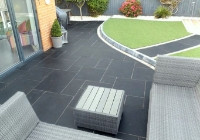
Patios, alfresco areas, and entertaining spaces experience more frequent use. Furniture, planters, and outdoor kitchens add weight to the surface.
For these areas, 20mm to 30mm granite pavers are commonly specified.
20mm Granite for Patios
Suitable when:
- Installed over reinforced concrete slab
- Traffic is pedestrian only
- Sub-base is structurally sound
When laid on a concrete slab using mortar adhesive, 20mm granite performs reliably in residential patio settings.
30mm Granite for Added Stability
Recommended when:
- Installing over compacted road base rather than slab
- Patio area connects to garden without solid edge restraint
- Larger format pavers are used
Thicker pavers reduce the risk of movement in flexible paving systems.
For homeowners comparing materials, The Paver Shop’s guide on Natural Stone vs. Concrete Pavers explains how different materials respond to load and installation methods.
Choosing Granite Thickness for Driveways
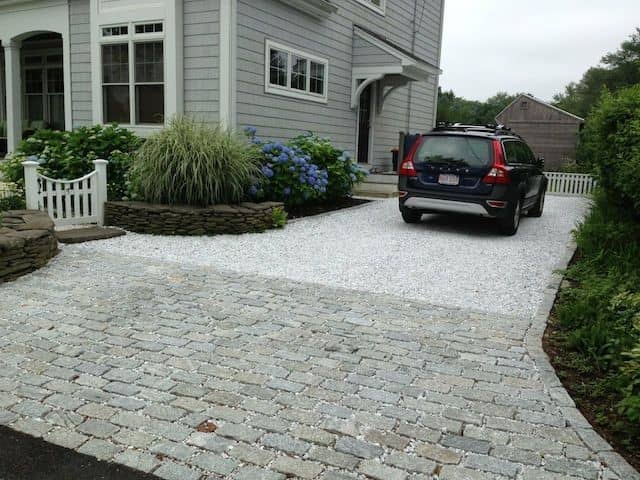
Driveways require significantly greater structural capacity than paths or patios. Vehicle weight creates concentrated pressure, particularly during turning movements.
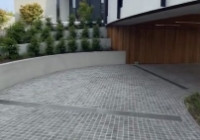
In most residential driveway applications, 40mm to 50mm granite pavers are recommended.
Why Driveways Require Greater Thickness
- Vehicles exert dynamic loads
- Turning wheels create lateral stress
- Repeated weight increases wear over time
Driveway installations typically involve:
- Deep compacted crushed rock base
- Reinforced concrete base in some cases
- Proper drainage to prevent water movement beneath the pavers
Using insufficient thickness in a driveway application increases the risk of cracking or surface instability.
When discussing options with granite pavers suppliers, homeowners should clarify whether the area will carry passenger vehicles only or heavier vehicles such as delivery vans.
Installation Method and Base Preparation
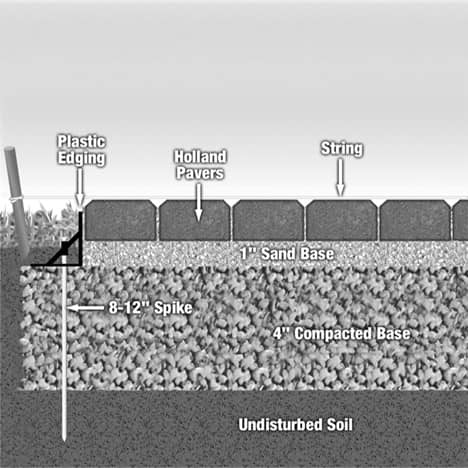
Thickness alone does not guarantee performance. Sub-base preparation is equally important.
Two primary installation methods are used for granite pavers:
Flexible Installation
- Compacted crushed rock base
- Bedding sand layer
- Suitable for paths and patios
- Allows minor movement without cracking
Rigid Installation
- Concrete slab base
- Mortar or adhesive fixing
- Common for driveways or high-traffic areas
- Provides maximum stability
A thicker paver installed on a poorly compacted base will still fail. Proper base depth and compaction are essential.
For guidance on selecting experienced installers, homeowners may refer to The Paver Shop’s blog on How to Choose the Best Paving Contractors for Your Project.
Climate Considerations in Melbourne
Outdoor paving must perform in changing weather conditions. In Melbourne, temperature fluctuations and rainfall affect ground movement.
Granite’s low water absorption reduces the risk of freeze-thaw damage. However, thickness combined with correct drainage ensures long-term stability.
Driveways and patios should always include:
- Adequate fall for water runoff
- Proper drainage channels
- Stable sub-base to prevent shifting
Maintenance and Long-Term Performance
Granite requires relatively low maintenance compared to some other materials.
Basic care includes:
- Periodic sweeping
- Occasional pressure washing
- Re-sanding joints if flexible installation is used
Thicker pavers generally offer longer structural lifespan in heavy-use areas, though maintenance requirements remain similar across thickness options.
For more detailed guidance, The Paver Shop’s article on How to Properly Maintain Your Natural Stone Pavers provides additional information.
Comparing Granite Thickness Across Applications
The table below summarises general thickness recommendations:
| Application | Recommended Thickness | Installation Method |
|---|---|---|
| Garden paths | 20mm | Flexible base |
| Patios (slab base) | 20mm | Rigid installation |
| Patios (road base) | 30mm | Flexible base |
| Residential driveways | 40–50mm | Rigid or reinforced base |
These recommendations may vary depending on soil conditions and expected traffic load.
Choosing the Right Granite Paver for Your Project
Selecting thickness is ultimately about matching structural requirements with design goals.
Before making a decision, consider:
- What type of traffic will the area support?
- Will the pavers be installed on slab or compacted base?
- Are there drainage or slope considerations?
- Is the site subject to heavy turning movement from vehicles?
Since opening in 2019, Paver Shop has been proudly owned and run by a trade professional with over 20 years of experience in paving and landscaping. We specialise in supplying high-quality, natural stone products (especially sandstone), offering a variety of options to suit your style and project needs.
Thanks to our hands-on industry experience, we can supply and install sandstone pavers, provide accurate quotes for your property, or connect you with trusted, professional installers. With us, you’re saving both time and money at a one-stop shop.
Prefer a more personalised approach or want to order other pavers such as bluestone, travertine, granite, or limestone? Take advantage of our "We Come to You" service and contact us on (03) 9462 4325 or email sales@pavershop.com.au.
-
 29 JanBy :Category : Uncategorized,0 CommentAluminium vs. Concrete: Choosing the Right Drain Grate for Your ProjectRead More
 -
 26 DecBy :Category : Uncategorized,0 CommentSandstone Pavers vs Bluestone Pavers: A Practical Comparison for Australian HomesRead More
 -
 27 NovBy :Category : Uncategorized,0 CommentGranite vs. Concrete Pavers: Which Is Right for Your Driveway?Read More
 -
 06 NovBy :Category : Uncategorized,0 CommentSandstone Pavers for Pool Decks: Why They Are the Perfect ChoiceRead More
 -
 15 SepBy :Category : Uncategorized,0 CommentCobblestone vs. Pavers: Pros, Cons & Which to ChooseRead More
 -
 26 AugBy :Category : Uncategorized,0 CommentWhy Choose Limestone Pavers? Top Benefits for Outdoor SpacesRead More
 -
 31 JulBy :Category : Uncategorized,0 CommentHow to Choose the Right Porcelain Paver Thickness for Your ProjectRead More
 -
 16 JunBy :Category : Uncategorized,0 CommentPlastic vs. Metal Drain Grates: Pros and ConsRead More
 -
 29 MayBy :Category : Uncategorized,0 CommentNatural Stone vs. Concrete Pavers: Which Is Right for Your Project?Read More
 -
 17 AprBy :Category : Uncategorized,0 CommentHow to Choose the Best Paving Contractors for Your ProjectRead More
 -
 07 MarBy :Category : Uncategorized,0 CommentIs Mapei Grout Waterproof? Understanding Its Water ResistanceRead More
 -
 10 FebBy :Category : Uncategorized,0 CommentWhat Is a Hide Skimmer Lid? Everything You Need to KnowRead More
 -
 21 JanBy :Category : Uncategorized,0 CommentWhat Are the Different Types of Travertine Pavers and Their Uses?Read More
 -
 13 DecBy :Category : Uncategorized,0 CommentPorcelain Pavers vs Natural Stone Pavers: Which is Better?Read More
 -
 06 DecBy :Category : Uncategorized,0 CommentTop 10 Benefits of Porcelain Pavers: Why They’re the Perfect Choice for Your Outdoor SpaceRead More
 -
 14 OctBy :Category : Uncategorized,0 CommentPorcelain Pavers vs. Concrete Pavers: Which is Better?Read More
 -
 04 SepBy :Category : Uncategorized,0 CommentLimestone vs Sandstone Pavers: How to Find the Right Paver for Your HomeRead More
 -
 04 SepBy :Category : Uncategorized,0 CommentAre Travertine Pavers Worth the Investment? Our Experts Weigh InRead More
 -
 04 SepBy :Category : Uncategorized,0 CommentTop 6 Benefits of Porcelain Pavers: The Perfect Choice for Your OutdoorsRead More
 -
 02 AugBy :Category : Uncategorized,0 CommentTypes of Drain Grates – A Comprehensive ReviewRead More
 -
 19 JulBy :Category : Uncategorized,0 CommentHow to Properly Maintain Your Natural Stone PaversRead More
 -
 05 JulBy :Category : Uncategorized,0 CommentThe Best Pavers Available in 2024Read More
 -
 23 AprBy :Category : Uncategorized,0 CommentPaving Solutions for Pool DecksRead More
 -
 18 JanBy :Category : Uncategorized,0 CommentEnhancing Curb Appeal with Bluestone PaversRead More
 -
 29 DecBy :Category : Uncategorized,0 CommentInnovations in Drainage Solutions: Lauxes GratesRead More
 -
 22 DecBy :Category : Uncategorized,0 CommentBest Grouting Solutions for PaversRead More
 -
 01 NovBy :Category : Uncategorized,0 CommentBenefits of Natural Stone PaversRead More
 -
 02 OctBy :Category : Uncategorized,0 CommentMaintaining Pavers: Cleaning and SealingRead More
 -
 28 SepBy :Category : Uncategorized,0 CommentChoosing the Right Paver Material | Advantages of Different Stone TypesRead More


